Disillusioned with the World, or Finally Seeing It Clearly? What That Demands of Humane Leadership Now.

If you're feeling anxiety, confusion, or numbness because of the numerous challenging events happening around the globe, you're not alone.
What we’re experiencing (in part) is what Naomi Klein refers to as the shock doctrine. Those in power seeking to create even more power and control for themselves are strategically causing chaos, distraction, and disrespecting human lives (except for their own). Sadly, this is not hyperbole. The result they seek is that the majority of the population feels disempowered and incapable about what they can do to change against a system that’s rigged against them.
Every one of us—every nation and every culture—lives under various illusions that help us understand the world.
Historians and political scientists call these illusions myths or social narratives.
At best, these are the ways that we perceive and understand our place in the world, and specifically within our country, culture, ethnicity, belief systems, shared ethics, and so on. These myths allow us to work together to understand how things work so that the world makes sense.
At worst, humans have exercised and practiced various forms of control, which Yuval Noah Harari refers to as the myths that create our culture in his book, "Sapiens: A Brief History of Humankind." These controls have dictated who belongs and who doesn’t within society.
When a powerful force like a government or an oligarchic-corporation disrupts the narrative, people figuratively lose sight of the plot and literally don’t know what to believe anymore.
A simple example of a social myth is money.
You can hold paper money and coins in your hand, but money is not a physical thing that in and of itself contains any value. Instead, money is a concept around which a narrative of capitalism has been built. To purchase something, you need money. To earn money, you need to do something in exchange for cold, hard cash. We all function within myths like this, often without being consciously aware of how these concepts direct and structure our lives.
At the extreme, cultural myths are dogmatic, restrictive, and fundamentalist in their ideological approach to what is right and wrong, i.e., who belongs and who doesn’t, and the negative consequences the out-group experiences as a result of dehumanization.
Many of these myths that, we assume, would be upheld for the collective good and respect of others, are now being callously torn down like a flimsy curtain and tossed aside. There is simply no more hiding behind social constructs and no allowance for naivety. Politicians are saying out loud with boldness and disrespectful audacity what was once suspected, but not what anyone would ever dare to verbalize.
Everything feels unhinged and disconnected from what we thought was reality, and from how we thought things should work.
When the government of a country like the United States decides to do a complete 180° turn on the last 50 years of what they proclaimed to value, e.g., cutting USAID programs (resulting in millions of unnecessary deaths), threatening to invade multiple countries, and murdering citizens in their own country, ’it’s understandable that disillusionment is one of the many reactions that any moral and ethical human should feel.
Close the book on the old narratives.
If the old myths no longer hold us together, we need to create new ones—humane ones that respect collective dignity.
For the last couple of weeks, in part because of what I've written here, I haven't written or published a new article. I am not immune from what's happening in the world, and I needed to care for my mind and spirit before discerning what I wanted to say. This down-time allowed me to create a new pathway that's aligned with my purpose to support others in making an empowering transformation for the collective good.
Presently, making the world a better place might seem impossible to achieve. That’s because in the midst of all the chaos, you can feel powerless to do anything to meaningful effect in opposition to governments and corporations seeking to control every aspect of your life. However, if you choose not to tolerate corruption and the loss of your freedom, human rights, and dignity, the best thing you can do is to focus on one thing and one thing only.
That one thing is not universal. Instead, it’s what singularly inspires and motivates you to rise and stand for what you believe in with absolute and unwavering conviction.
For me, that one thing is fighting for and supporting the rights and freedoms of queer and trans people—including challenging heteronormativity and mythologized social norms through a queer lens to consider what needs to change to get a better result for the collective good. That requires human-hearted leadership, self-awareness, critical thinking, humility, open-mindedness, personal well-being, and equanimity.
If you’ve been reading my previous posts, you’ll see repeated themes, challenges to conventional thinking, and suggested practices to develop the requisite skills to be an effective and influential change leader who advances dignity and equity for the social good.
However, a challenge I’m facing is that publishing new content doesn't necessarily precipitate actionable change in those who consume my ideas. For me, that's not good enough, which means I need to do something differently to get the results I want. That doesn’t mean that I have to change what I stand for or my message, rather, I need to create engagement in real-time.
What I Stand For and How I’m Choosing to Share My Message
If you don't know what you stand for, you won’t have a leg to stand on.
With so much divisiveness, the world needs ethical and empowered leadership from self-aware, open-minded, and human-hearted individuals who are not afraid to publicly stand for what they know is just and what is unacceptable.
It may seem like a contradiction, but the idea of what is right is not always true. Right and wrong, morality and ethics evolve and are nuanced across the globe, depending on where you live and the cultural narratives and myths to which you’re unconsciously subscribed. What's important is that we become proficient at helping people understand the difference between justice and the ideological slide towards a binary right versus wrong.
This is what makes my approach queer: we need to take the road less travelled, to walk along the margins to see the bigger picture and expand myopic perspectives.
We cannot accept bullying, dehumanization, or intellectual laziness.
You do not have to be the person out in front of a public protest or march, or taking the lead on social media where everyone sees your name.
How you stand for what you believe in can be demonstrated and practiced in how you support others who thrive as the leaders in the public eye. Hoping that someone else will speak up will only allow those working against you the satisfaction that you’ve given up—allowing them to win by default. Apathy is the greater enemy of the two. Thinking that someone else will solve your problems will only result in an authoritarian state that dictates what you are allowed to do and who you are permitted to be.
As a coach for queer and trans leaders, passionate about developing a new ethics for a common humanity, I need to share my ideas in a dialectical, question-centred, and human-hearted way. It’s too easy to sound shrill and reactive, which I have done in the past. For the difference I want to make, I need to regulate those reactions and keep them to myself, my partner, and friends.
In other words, sometimes we have to release our burdens, but I don't need to dump my emotional challenges and reactivity in an article when my goal is to improve the well-being and self-mastery of others.
What I Stand For—Defined
Honesty & transparency
To be fair, there are some people in the world right now who I consider despicable, yet at the same time are being honest and transparent.
To drive this point home, I believe what whatever Trump proclaims he’s going to do is a likely possibility. Much of what he has previously said, he now has the power to enforce (however illegal). His threats to take over other countries have already come to pass.
In Trump’s case, honesty and transparency are not indicative of a kind, respectful, or humble person. Dishonesty and a lack of transparency do not build trust; instead, they erode and kill trust and respect. This certainly doesn't mean you should ‘respect’ someone like Trump for his brutal ‘honesty’ (if we can even call it that), rather, you can simply see his truth and prepare for what’s coming next.
It’s important to state that I believe honest and transparent communication comes from a place of communion; the sense of fully connecting with someone else in kinship, fellowship, and affinity with mutual respect and recognition. This is the antithesis of Trump.
Personal responsibility & self-mastery
Recently, I read an essay on Aeon by Paul Katsafanas titled, The Perpetual Enemy: Why We Thrive on Political Grievance. The article examines the rise of grievance politics and how individuals and movements define themselves through perpetual opposition rather than positive goals.
Here’s a summary of the article's argument.
- Katsafanas distinguishes between movements that use anger as a tool for specific progress (e.g., climate change and trans-rights activists) and those that are constitutively negative, requiring a constant supply of enemies (trans people, women, Democrats, Liberals, etc.) to sustain their sense of identity.
- This psychological state often stems from ressentiment, a process where personal pain or feelings of inadequacy are transformed into a righteous, outward-facing hostility. In other words, the person believes their problems are all because of someone or something else. Because the movement’s internal cohesion depends on this narrative conflict of us versus them, traditional solutions like policy concessions or citing a list of facts to correct falsehoods or misinformation usually fail to decrease the outrage.
- Katsafanas suggests that the only way to counter this constitutively negative cycle is to foster devotion (which carries no religious meaning), a form of commitment to shared values that provides meaning to both sides without the need for an antagonist or enemy.
- Ultimately, Katsafanas argues that democracy is threatened when hostility itself becomes the end goal rather than a means to resolve injustice.
I'm sharing Katsafanas’ ideas because this is by far the most proactive approach to personal responsibility and morality that I've ever read.
For years, I have written about taking personal responsibility for what happens in your life. What I don't mean is that you are responsible for what other people do or what you are powerless to affect. Instead, I'm proposing that we need to master our thinking, emotions, feelings, and choices in response to what has happened, what’s happening, and the difference we desire to make for the collective good.
What we glean from Katsafanas’ argument is the following. Those of us who stand for humane rights, freedom of expression, dignity, and respect stand in stark opposition to those seeking power and control over everyone else (the bully effect). We also stand in opposition to those who have given up thinking for themselves and taking personal responsibility for their own agency, choosing instead to blame another group of people or external circumstances for their problems (ressentiment).
Bullying, power-over, and ressentiment will never work towards meaningful transformation for the collective good.
Critical thinking, humility, and open-mindedness
I believe these are three essential human virtues for the collective good and the recognition of human dignity, that are best when practiced as a whole.
Following my discussion of personal responsibility, the process of justice, equity, and supporting the collective good is a requisite slow endeavour. Meaning, we cannot make human relations more accepting, humane, or understanding if we are experiencing fear or threat. We need to slow down to calm down, and breathe to get centred so that we can think clearly, allowing us to see other people as people and recognize their equal nature and dignity.
We must then think together in the most open-minded and humble way, with the conviction that the work required to make humanity more accepting is ever-ongoing and necessary to our survival.
Fairness, respect, human rights, justice, and freedom of self-expression
Moving into the realm of morality and ethics, the values of fairness and respect are more relatable words for the general population to practice instead of an abstract philosophy or political doctrine.
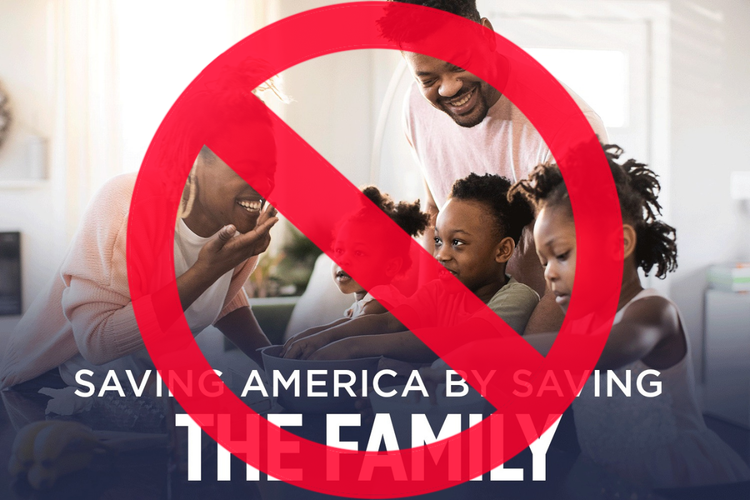
Freedom of self-expression, including one's right to decide on gender expression and sexual identity, scares many people for reasons I don't fully understand. It's not because I don't know where these misgivings come from. I believe that the fears and disgust expressed as ‘family values,’ the ‘destruction of the nuclear family,’ or the ‘corruption of youth’ come from the individual’s suppression—and most-often religious ideology—of enjoying the freedom to be fully human.
Meaning, the only reason you should experience any disgust or fear of queerness is because you are not willing to acknowledge the fact that those feelings and desires likely exist within you.
Equanimity
At the risk of sounding like I'm making another contradiction, without knowing what you stand for, instability, uncertainty, frustration, and anxiety are likely your predominant emotional states.
Equanimity is the experience of calmness and composure, especially during difficult situations. The origin of the word comes from Latin and means of equal mind. This gives the word its root meaning of fairness and impartiality.
For this article, I consciously chose to describe what I stand for in a particular order. Equanimity comes last because it grounds what I most value and the virtues I practice through a lens of fairness and impartiality. I admit that the latter, impartiality, is exceptionally challenging at times. Acting with impartiality does not mean that you cannot or will not make a judgment. I believe that impartiality tempered with fairness is what moves us towards a more profound understanding of the fluid nature of justice.
If we do not process and practice peace of mind—if we are not of an equality-centred mind—justice suffocates without the air it needs to thrive.
How I’m Supporting Change Leadership & Queer Integrity
Earlier, I mentioned that hitting publish on an article with different approaches and practises to improve one's leadership doesn't necessarily create meaningful or actionable change.
Why is that?
When I read articles on Substack, Medium, or Aeon, I'm consuming information, not just for the sake of reading, but to educate myself. I’m a life-long learner who loves to continuously expand and develop my critical thinking skills, and integrate new or refined knowledge into my work as a coach and my writing. This is a conscious choice to become more effective at what I love to do.
However, social transformation and change leadership for the collective good does not rest on the shoulders of one person alone.
I've realized that I'm doing something of a disservice to the people I can help the most by not providing access to working together in a real-time, easy-to-access, and collaborative way. In other words, we need to meet face-to-face. The easiest way to do that is in person or virtually.
So, I've decided to launch something new to solve that problem.
An Invitation to The Queer Integrity Salon
A salon was historically a reception-room gathering of writers, artists, and other notable thinkers, often hosted by a prominent woman in high society. I prefer salon to webinar or think-tank because it carries a deliberate, slightly subversive edge: salons created space for women’s intellectual agency when avenues like politics and business were limited and controlled by men. Today, “salon” mostly refers to hair salons, which are typically queer spaces.
Reclaiming the older meaning of salon feels fitting for a gathering of queer thinkers and change leaders.
The Queer Integrity Salon will be a gathering of diverse minds.
These meetings will not be academic or elitist in nature. We won’t shy away from the difficult, but we will honour dignity and respect to brainstorm, discuss, and strategize ethical change and transformation for the collective good.
The first meeting of the Queer Integrity Salon is planned for early to mid-February. More details to follow.
Meanwhile, if you’re interested in getting some one-on-one help applying what I’ve shared to your specific situation, I offer a 4-session Discernment Sprint over 4 to 6 weeks to help you think clearly, align decisions with your values, and lead with conviction. Connect with me here, and send me a brief description of the challenge you’re facing, and I’ll get back to you with all the details.



Member discussion